A Forest for the Trees

Fifteen years ago, traveling with an underwater camera meant carrying a dedicated camera system and housing along with all my scuba gear—two full suitcases and a carry-on bag. These days, the cost and aggravation of transporting that much equipment can pretty much ruin the idea of traveling at all.

Last year, I bought a DIVEVOLK SeaTouch 4 Max housing for my iPhone 15 Pro Max, along with a red filter and a few other little doohickeys I thought I might need. Compared with the cost of housing any of my APS-C, full-frame, or medium-format cameras, it was ridiculously inexpensive. So inexpensive that I reread the reviews to make sure the housing wasn’t made from Swiss cheese or cardboard.

Before 2023, I hadn’t been diving in eleven years. My dive gear—and I—were old, crusty, and out of practice. But getting back into the water with a camera was life-affirming and immediately comfortable, like getting back on a bicycle. By streamlining both my camera system and dive gear, I was also able to reduce the cost and stress of traveling to a single suitcase.

There was one problem.

It occurred to me that if the housing failed at depth, the phone inside it—my lifeline to the digital world and the place where I stored nearly everything I needed for the trip—would probably flood. Getting home could become interesting in all the wrong ways.

So I went to Back Market and bought a heavily used iPhone 14 Pro for about half the price of a new phone. That would become my underwater camera. If it didn’t work, I could still use the iPhone 15 and hope for the best.

Since buying the setup, I have photographed dives in the Florida caverns and on the reefs of Bonaire and Dominica, with no complaints whatsoever.

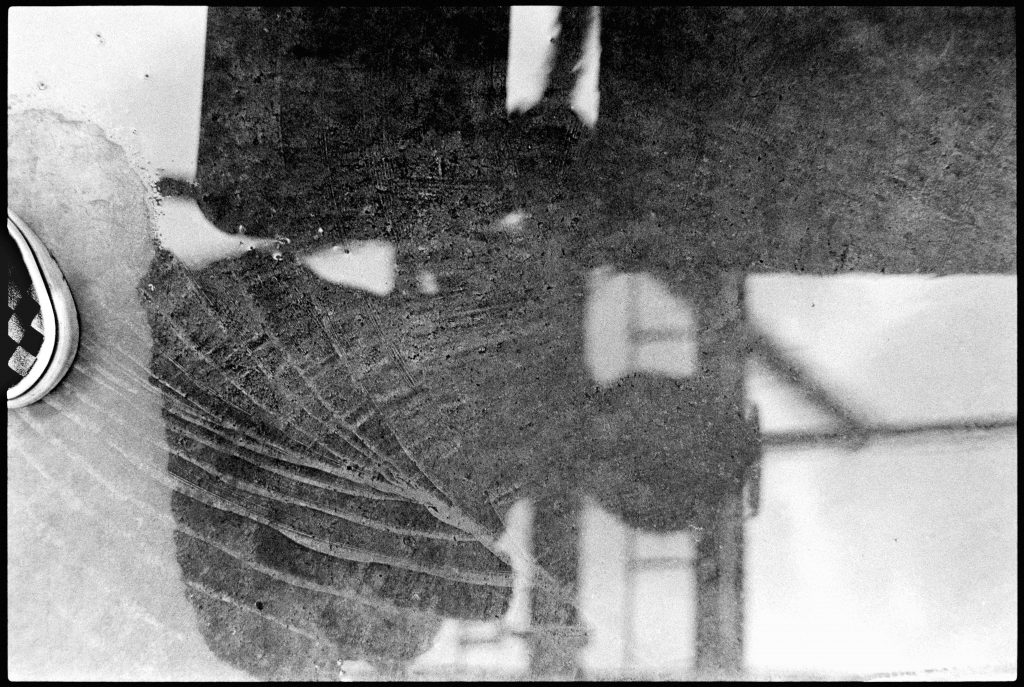
When I made this photograph, there was a fair amount of sargassum in the water, and visibility was cloudy. The original image was drained of color and predominantly blue. It was pleasing, but not quite the photograph I wanted.

The pilings already felt less like a human structure than an underwater forest, with the divers drifting between them like unfamiliar wildlife. I converted the photograph to black and white, then added a little clarity and contrast in Lightroom. The monochrome treatment separated the light, sediment, divers, and encrusted columns more clearly while preserving the murky atmosphere that first attracted me.

Although I had brought both a video light and a red filter, I found myself loving the black-and-white renderings from this location. Removing the color seemed to make the underwater world stranger, quieter, and somehow more timeless.

All in all, the DIVEVOLK housing—and my decision to trust an Apple phone as an underwater camera—has been one of my best photographic purchases in recent years. I love the results I am getting, and DIVEVOLK is firmly on my radar as I continue rebuilding my underwater photography system.

Weeping Sunflowers at Solstice

Well, it’s that time of the year again. The shortest days bring the least amount of light into our lives and most everything that grew over the summer is dead, sleeping or suicidal – like these poor, pathetic sunflowers. Looking at them, I wanted to crowd fund some therapy for them, but instead I did what any heartless photographic voyeur would do, I exploited their trauma with a picture.
When I pressed the shutter button, I knew that the image would be backlit, but I expected more color in the image from Kodak Portra 400, which is usually so delightfully vibrant. I was surprised and happy however, that the suggestion of color, rather than an overt blast of chroma, adds to the sense of the loss of light in the world at this time of year.
Shooting film on antique cameras never ceases to bring surprises and joy for this camera geek.

About the photo: This was taken with a Plaubel Makina 67 medium format film camera on fresh Kodak Portra 400. The camera is a unique joy to shoot with and the f/2.8 lens is unheard of in such a small portable package.

The unexamined life is not worth living.” – Socrates

Sometimes the winter kicks you in the butt and you just can’t – or don’t want to – get outside to get your creative on.  My creativity definitely diminishes in direct proportion to how much I am shivering, or if my fingers are too numb to press the shutter button.  And since my creative starts with photography, and I’m not about to brave ice, snow, slush, sleet, psychotic Philadelphia drivers, and that special hell known as the Schuylkill Expressway in order to get to a decent photo location – or my screen print studio as a backup –  I just have to get even more creative to come up with in-the-home photo activities.

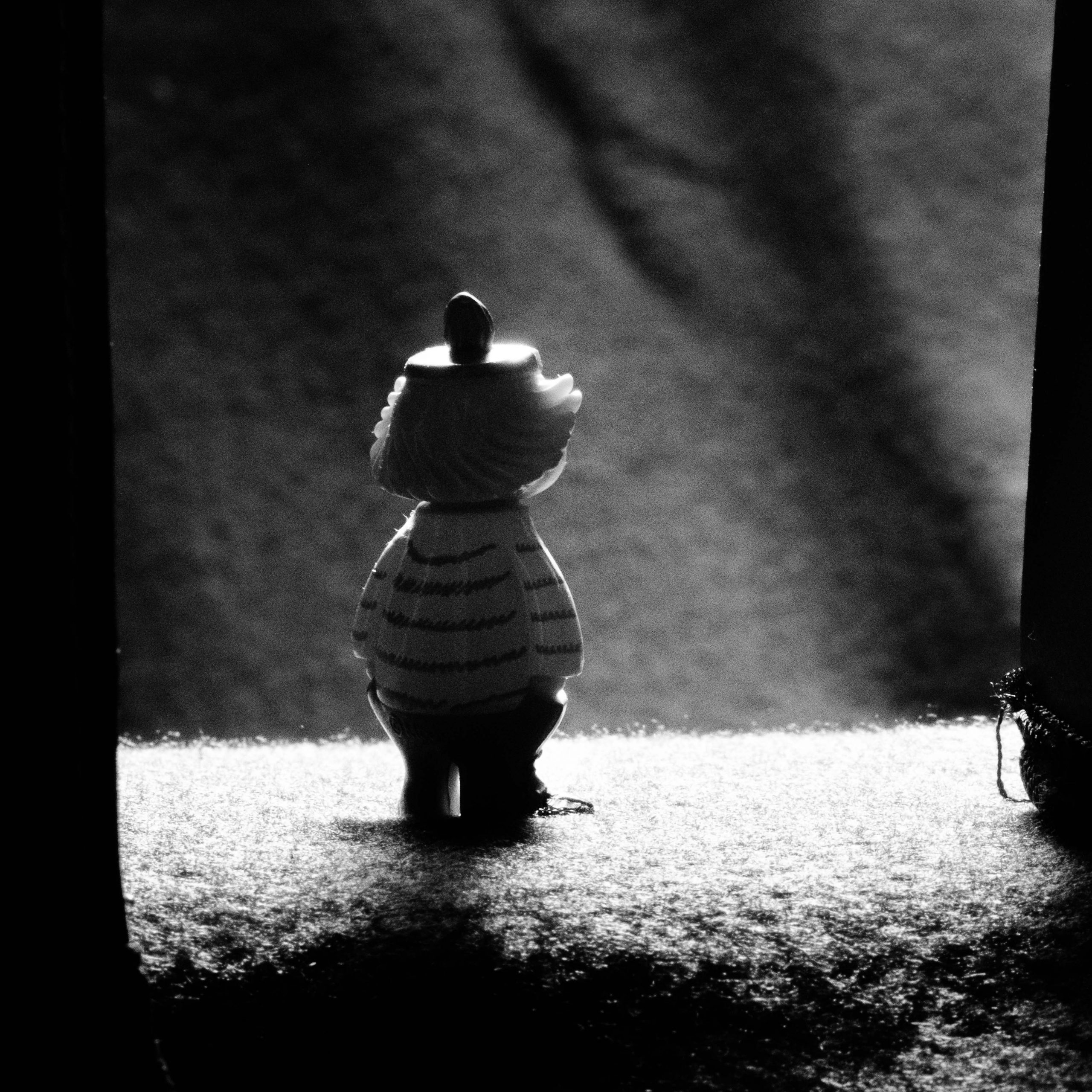
The concept for this shot was introspection.  My model was a one-inch-tall plastic action figure – the character was Too-Ticky from the Finnish/Swedish Moomin-Troll universe created by the late Tov Jansson.  At the time of this shot, as I was pondering retirement from my tech career. I was trying to capture the feeling of my state of mind – in essence where I wanted to go and where I had been.  Could I achieve my goal of re-inventing myself as a photographer and artist in my sixties?  Could I somehow fine relevance is such a young and cutting-edge industry?  This is what I wanted to express with the photo.

Black and white was definitely the way to go here – and I wanted it to be dark, moody and dramatic. It would be a bonus if I could throw in a bit of rim-lighting because I love it. 

About this Photo:    This photo required: 1. The edge of a jacuzzi tub.  2. A couple of black fleece throws. 3.  A Too-Ticky Moomin Troll action figure. 4. A desk lamp.  5.  A digital camera.  6. Five minutes from concept to cleanup.    I love film, but when I am experimenting with lights, digital provides the feedback and immediacy that I need to work out the niggles in a shoot.  Film is awesome, but the name of my site is ‘Film Sometimes,’ not ‘Film Always.’ I was able to adjust the dark framing around the borders, so as to give the subject the illusion of constraint and in the end, I was not unhappy with the shot.

Photo Gallery: Things That Drip, Grow and Bark

This gallery is from a test of a film camera and lens to see if it was worth taking on trip to Yellowstone National Park. You have to click ‘Continue Reading’ in order to see all of the photos.
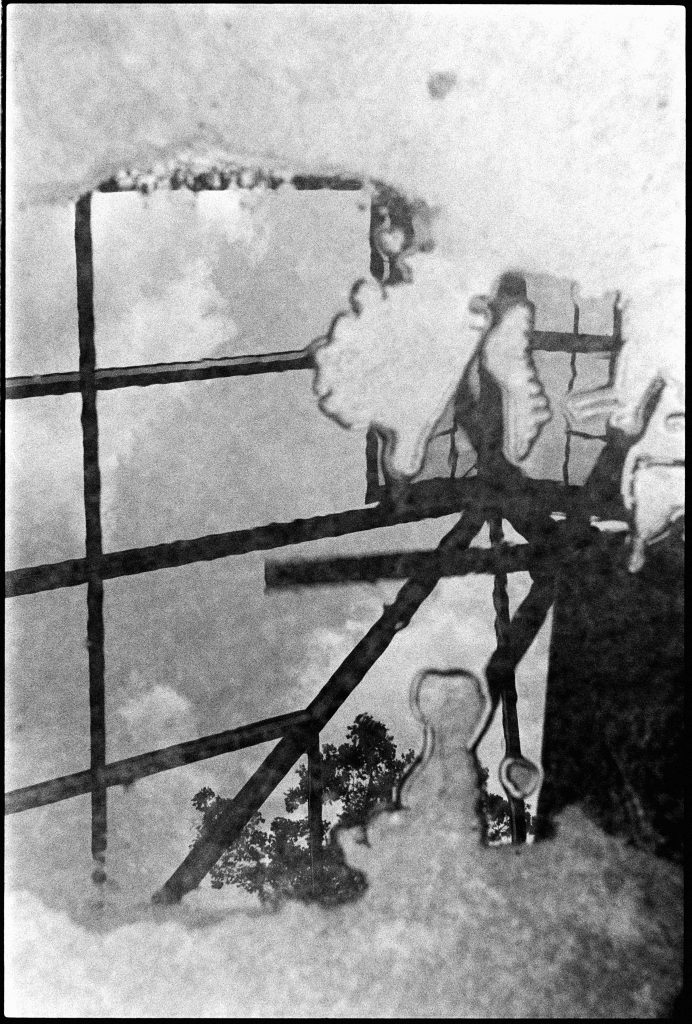
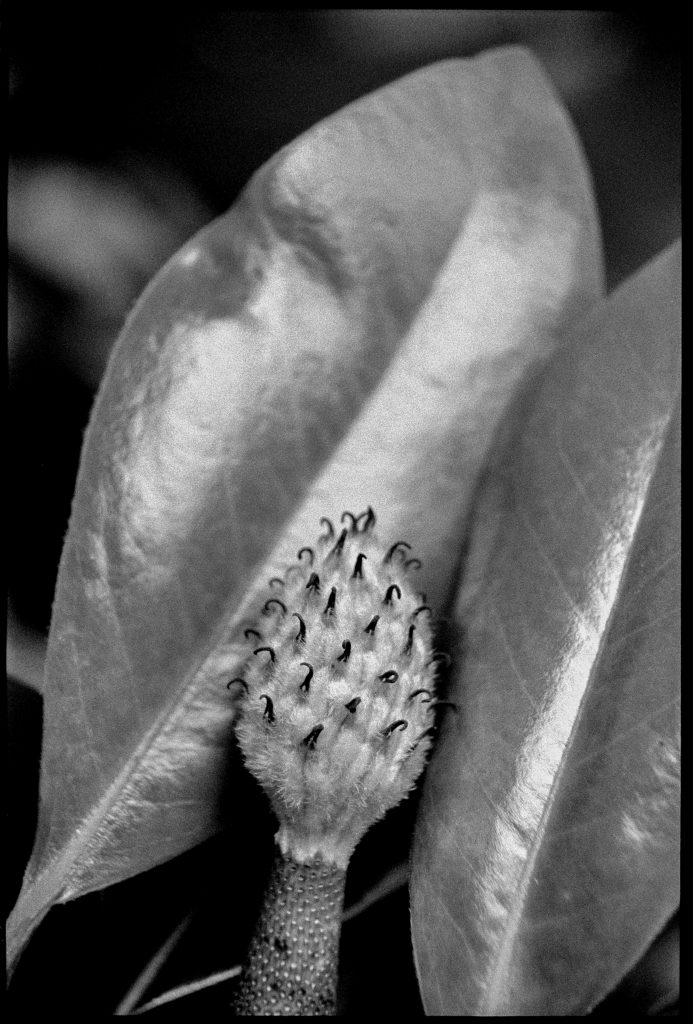
It’s best to extensively test a lens and camera combination prior to taking it somewhere important or where you might not have backup in case the combination is disappointing. From these tests, I found that I was happy enough with the Nikon F100 film camera with the Nikkor 28-200mm G ED f3.5-5.6 ED, F-Mount lens. I took gallery of shots was taken at home and at a local park just a few miles away. It includes some of my favorite subjects; Things that drip, grow and bark.

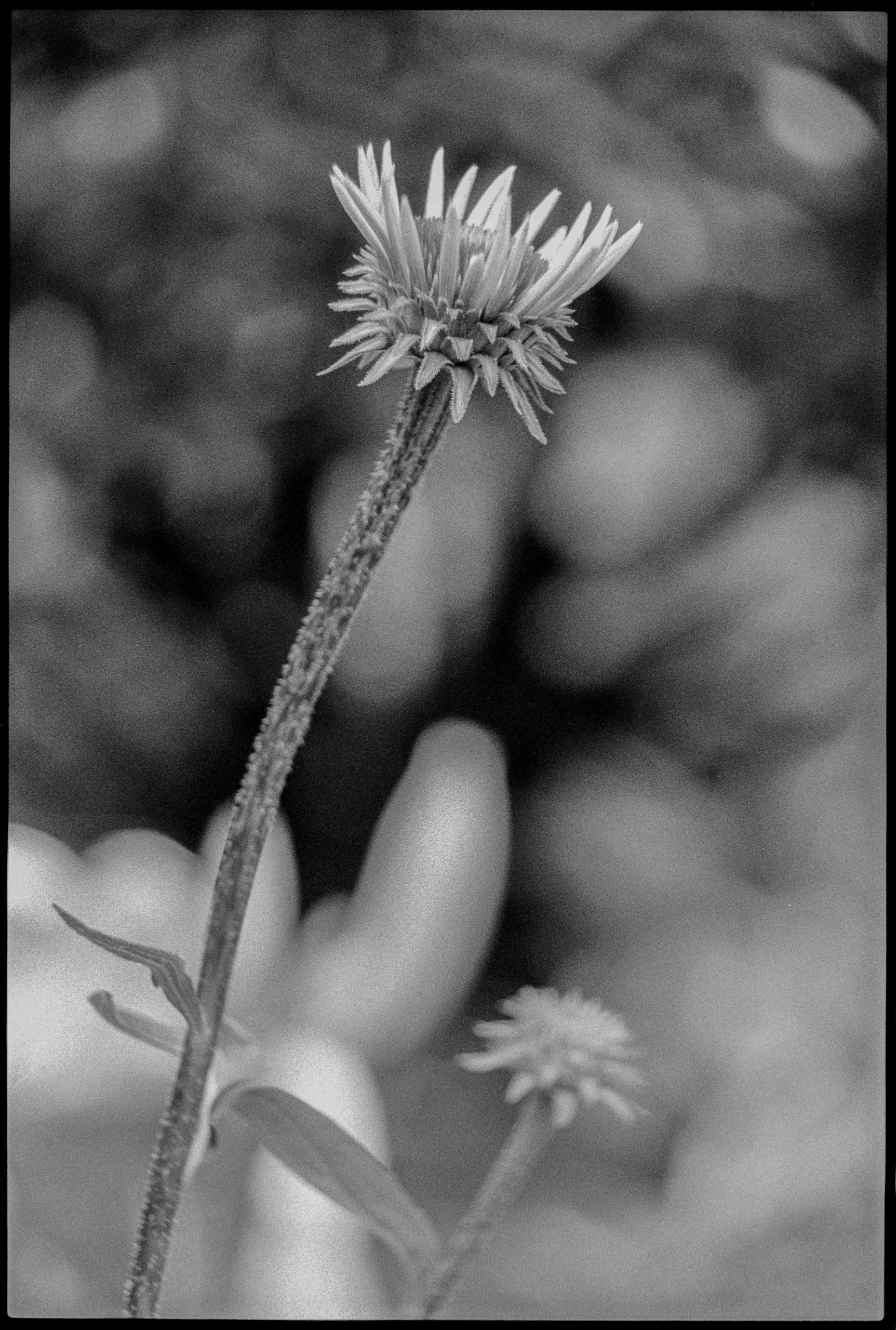
About the Photos: The flower shots were boceh/lens blur tests which came out better than expected considering that it is a very inexpensive (relatively), compact and lightweight superzoom lens – what I would usually consider a recipe for mediocrity. But in order to be outstanding, you have to stand out. And the separation in the flower shot, between the subject and the background, is excellent. Again, much better than expected. This lens is a winner.

I also love the Nikon F100 for vacation film photography – when you cannot go back to reshoot a subject later – because, while you can use it on full manual, you also have the option to run it in aperture priority or full auto, a luxury I sometimes need with wildlife and street scenes. The only downside of this camera, for me, is that it weighs in a little heavy. But if you throw a nifty fifty or a lighter weight prime lens on it, it really isn’t that bad.
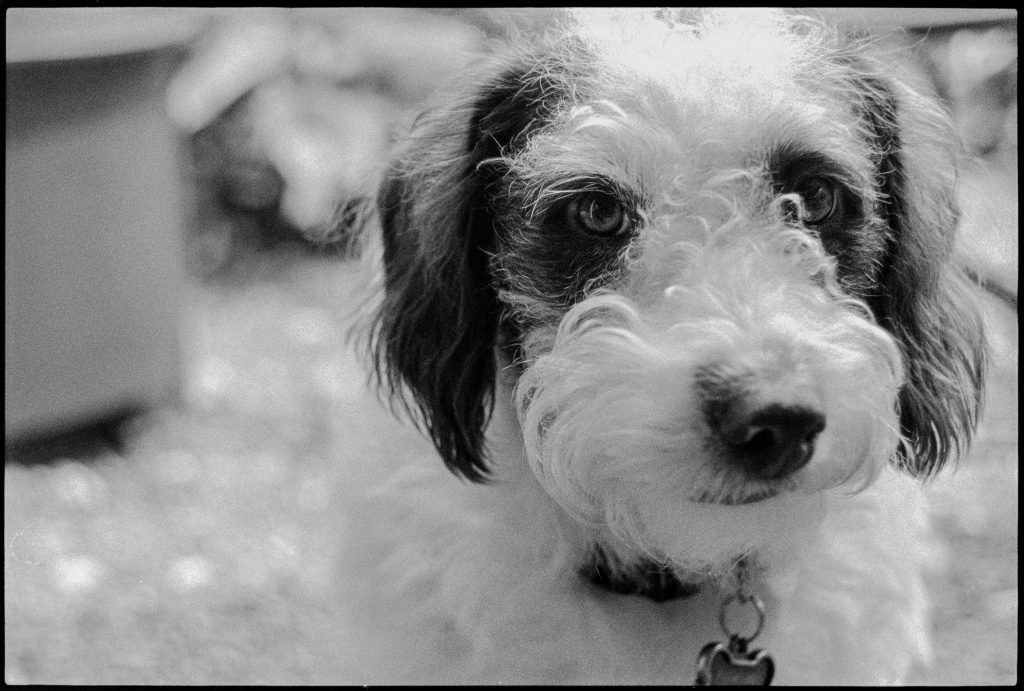
The film used, Ilford HP5 400 – showed some lovely grain and contrast. The water shots – my favorite go-to subject matter these days is anything water. There are a couple of indirect portraits in here, to further test the capability of the setup, and of course, the dog. A dog with human eyes, I get told often. All in all, a good workout for the lens and camera, which I did indeed take with me to Yellowstone, with good results.

I love testing ‘new-to-me’ film cameras.

What Do You See?

With all art, you have a message that is intended by the artist, and the message received by the viewer. Often – usually – those messages have at least some level of disconnect. Posting this shot for viewing and critique seems to bring up some strange interpretations. What do you see?

I have been told it looks like ice, plastic, and a bunch of other materials. It’s actually water and air. As a scuba instructor for more than 25 years, I taught people how to blow bubble rings while underwater. If you puff them out just right, you can watch them float to the surface, expanding the whole way, before they break apart. They are astonishing to watch, they seem alive, and they catch the light in ways that are incredibly beautiful. This photo is of one of those bubble rings, caught as it is rising towards the surface. Very few viewers have ever figured out what this photo is about.

Scuba geek, meet photo geek.

Unexpected Wildlife

Sometimes I feel like someone is watching me…

It’s kind of disturbing to look out your office window and see someone looking back at you, but it’s also OK, when you’re a nature geek. This cute fellow is a Screech Owl who spends his days sleeping in my tree, Just a few feet from my house, and on a busy suburban street. He’s a wonderful reminder that nature has been finding ways to integrate with us, and even though this is probably because the animals have no better option, it’s really nice to see them, at least until they break in and have a party in your attic.
Since moving into our home ten years ago in a very suburban neighborhood we have hosted a deer, several foxes, this owl, red-tail hawks, an opossum, and a racoon or two. I won’t mention the flying squirrels, but they are there and they keep coming back. Especially the we adopted – Squeakus. I’m a sucker for cute fuzzy tail and a long lens.

About the Photo: This one was shot with the legendary Nikon D500 camera and the under-appreciated (by the media, not by me) Nikkor 28-300 G Super Zoom lens on a frigid cold day. The owl did his best to look nonchalant as I worked in for a good shot. He was a good sport and patient model. I’d definitely work with him again.

I like to consider this one as an effective ‘two-beat photo,’ if you are going to use the terminology of Michael Rubin, the creator of the Everyday Photography, Every Day podcast and his book Photo Haiku. The first beat being an effective, high contrast photo of a tree in the suburbs, and the second beat, the punchline, if you will, being the discovery of the owl in the knot.

Boost Drama with Rim Lighting

Rim Lighting creates drama in a photo – more so than with most lighting techniques – and in the right situation it can be just the creativity you need. This shot turned a photo a session from typical and blah into something that really pops.

To do rim lighting you really need off-camera lighting.

Essential Skill: Swimming.

As an older parent, raising a young child, I want my daughter to choose the extra-curricular activities that help her express the woman that she is becoming, and I do not want to spend valuable emotional currency attempting to force her into courses and activities that do not sync with her sense of self.

That said, the one area where I will not compromise is swim lessons.