Maybe There’s a Story

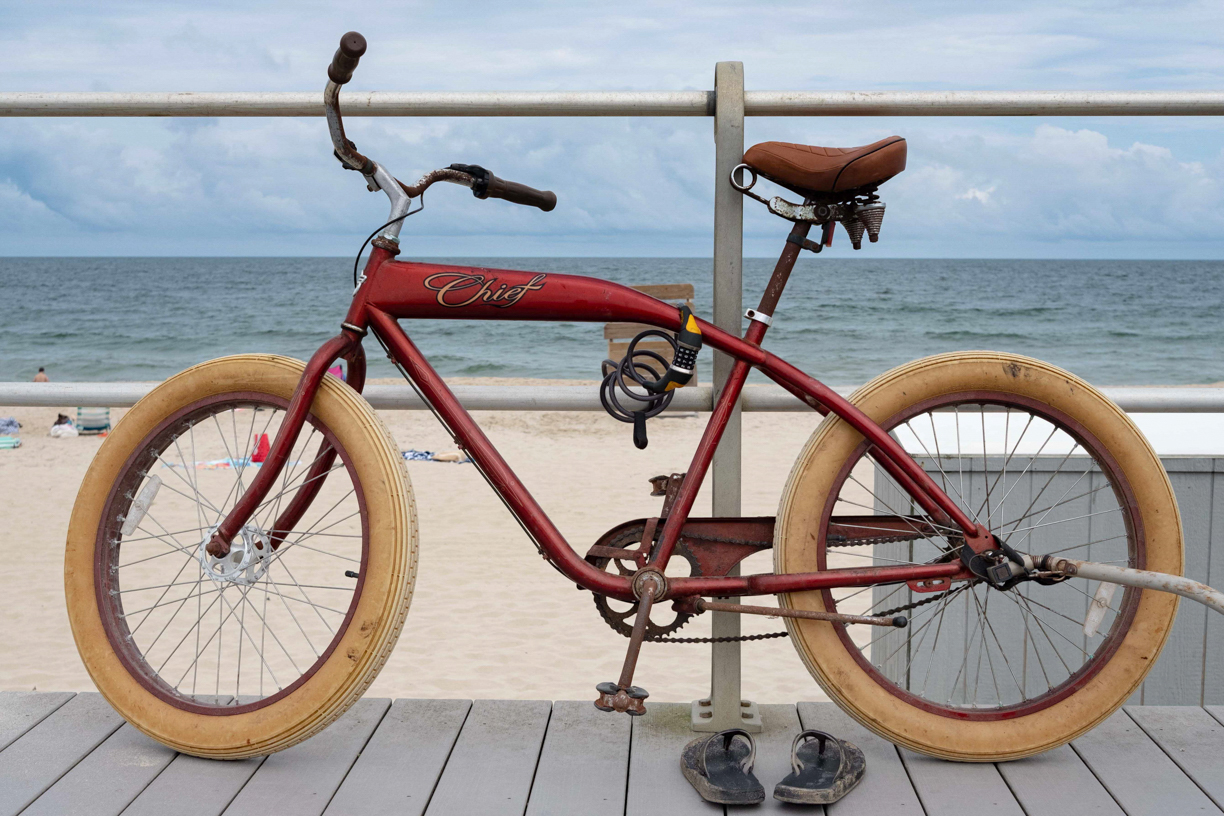
If photos were superheros, their superpower would be their ability to convey a story at a glance. On a cloudy day, at the ‘Jersey Shore’ I caught this bike, the sandals, and the handful of cloud bathers out in the sand. Which one rode in on the bike? Where did they ride in from? Was this a daily pilgrimage or a one day bike rental? What is the narrative here?

I like to capture scenes like this and hold on them. Save them for a cold, cloudy winter’s day – to unwrap them and use their heat, as needed.

About the Photo: Taken with the venerable Fuji X-T2 – which I feel is the perfect APS-C camera for me. It drives like a Porsche, has every control you need on a dial right in front of you, and still after 7 years, takes photos that make me very, very proud. I’ll upgrade when this one falls apart thank you. I paired the camera with Fuji’s XF 35mm f/2 lens, (50mm equivalent), which is also quite wonderful. A great walk around and travel lens, which is to say small, light and visually awesome.

“Every picture tells a story, don’t it?”

The Chicken Says Don’t Drink the Water.

Listen to the Chicken.

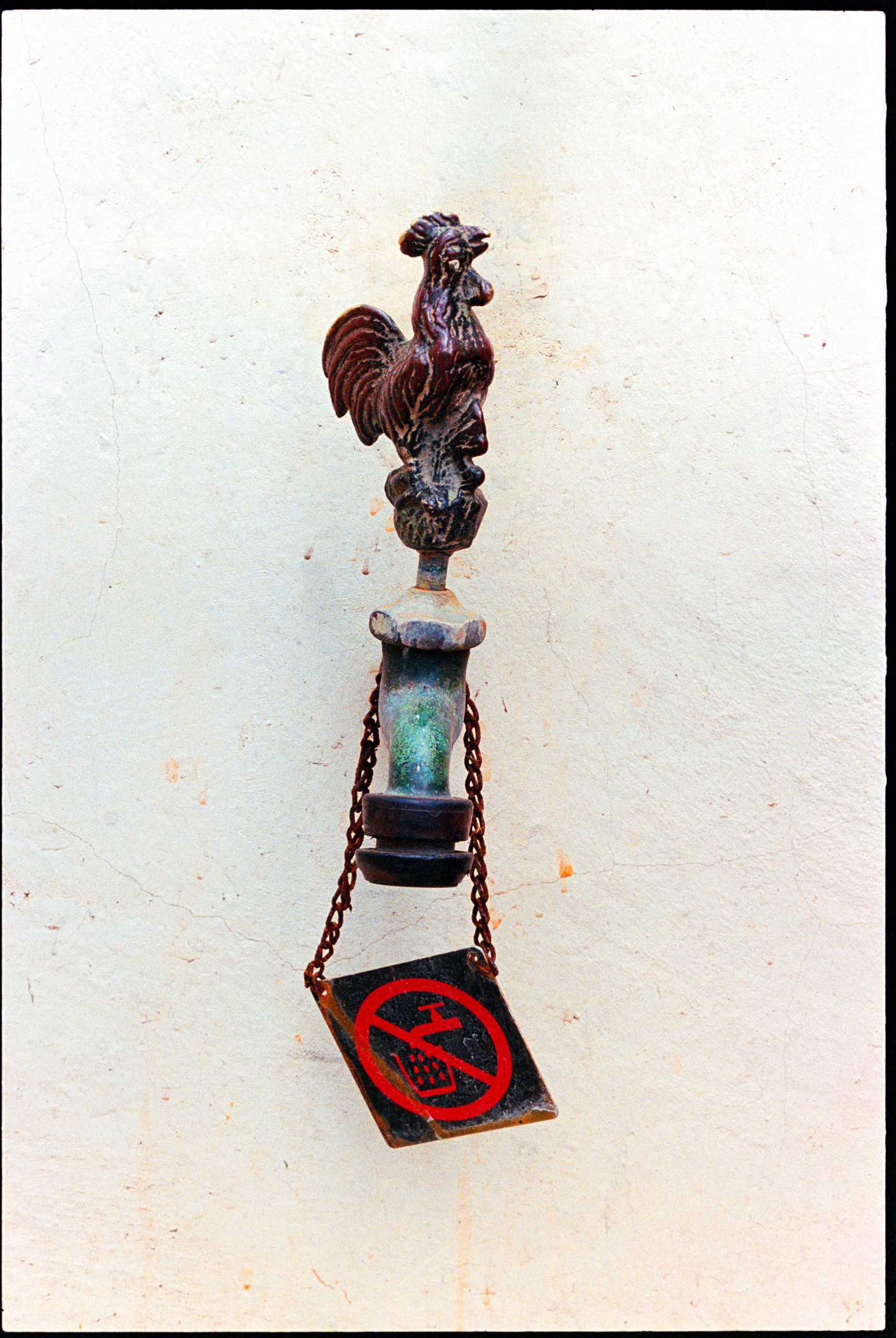
I enjoyed the simplicity of this water spigot – in Philly, we pronounce that ‘spicket,’ The simple plaster background really helped isolate the subject and the rooster shaped handle truly fit the theme of Chanticleer Gardens, where I took this photo. I enjoy the tiny splatters and drips on the wall – along with he cracks and texture it creates such a subtle background. The patina in the metal, along with the strange angle the little metal sign is resting, all lent to the subtle whimsy of the shot. I made this image with expired film in a vintage camera using an old lens, shooting patina and decay. We all have our hobbies. I guess it doesn’t take much to amuse me.

And there is a lesson in this image for all. When a chicken tells you not to drink the water, you should listen to the chicken. I shudder to think of what could have happened if had ignored his advice.

About the Photo: Shot on my of my three favorite Nikon film cameras, the Nikon FM. The whole FM family is great, but I like the FM and the FM2N, they are small, handy, light and have everything a film purist needs. My other two film camera bodies are the F3HP and the F100, which are both great cameras in their own right. It took a lot of camera tests and a lot of film to come up with this triad. The lens used here in the Nikkor 50mm f/1.8 Ai. It’s a fast, small, light autofocus lens that does an excellent job for manual and autofocus cameras. Truly one of my favorites. The film was Kodak Gold, long expired and of dubious origin, found in an iced over freezer on an abandoned farm in Oregon wine country. Really. What could possibly go wrong.

Darkroom Fun With Lightroom

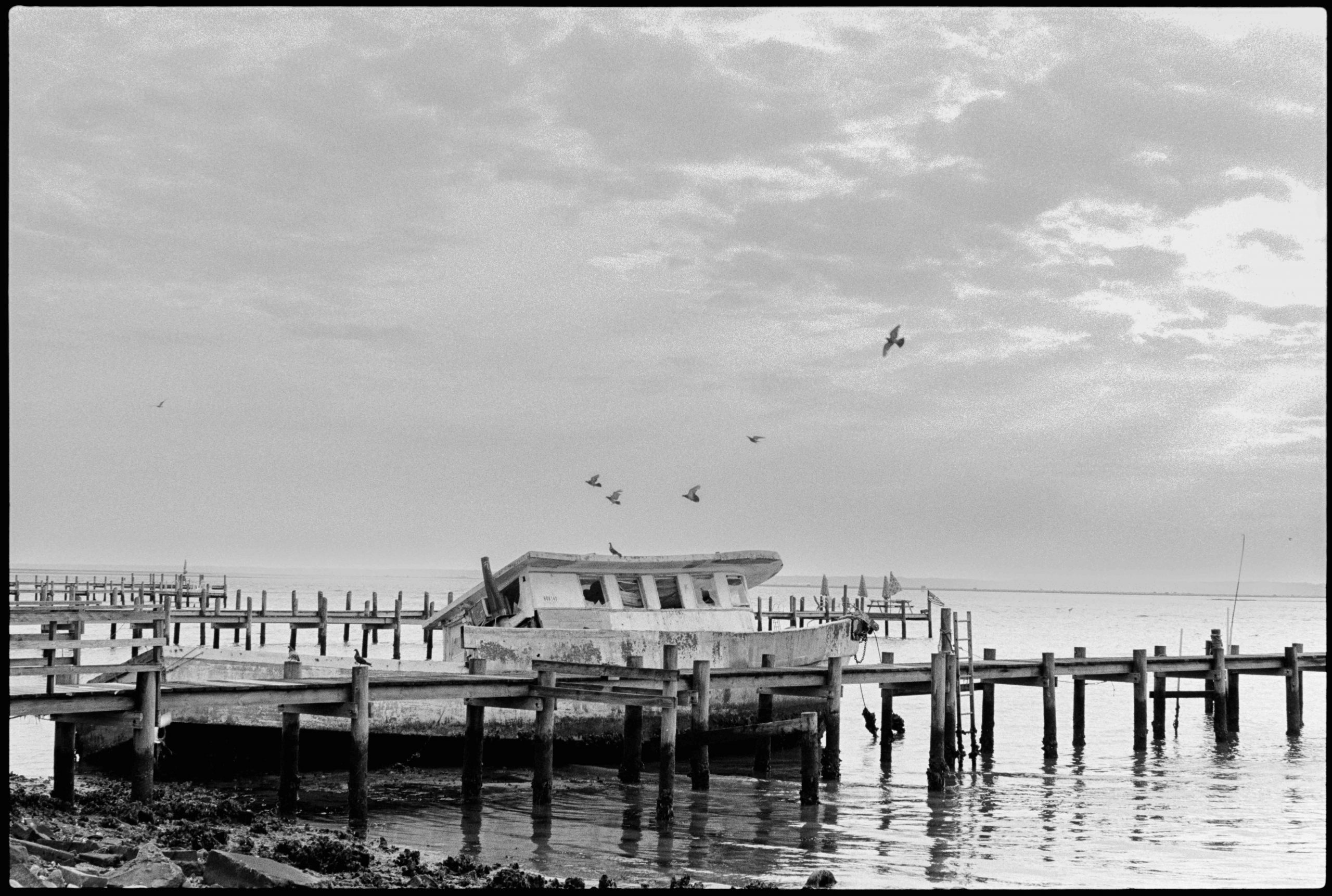
This photo is my favorite visual analogy of how I felt emerging from the pandemic. I felt like the boat – beached, abandoned, broken, and a target for pigeons. I spent a lot of time on this negative in the Fleisher Art Memorial Darkroom, working contrast filters and dodge and burn techniques in order to bring up the clouds and minimize the shadows enough to bring detail, but without losing the mood.
This version is what I replicated in Adobe Lightroom, which is so much faster and intuitive. Still the darkroom teaches these concepts so much better. Both tools, the darkroom and Lightroom make me a better photographer in different ways.

This was a borrowed camera shot and the biggest problem with borrowing a classic camera and a classic lens is that I usually have to go out and buy one after I’ve had a chance to play with them.

About the Photo: One of my favorite photography friends and my film processor of choice, Professor Gina Talley of https://www.femmefermental.com – lent me her 50-year old Nikon F2 camera along with a Nikkor 55mm f/3.5 Micro lens for my first post-pandemic vacation in Chincoteague, VA. The camera was amazing – it has a tactile feel that I can only describe as what a film camera should be. We discussed this and we decided that it had great ‘clickiness,’ which meant something at the time. The heft of the camera, the feel in the hand, the smooth throw of he film advance lever, the feel of the shutter button and the lovely sound of the shutter release all bring home a feeling of pure correctness. All though I slightly prefer the F3 due to its weight and its ability to be pure manual and also autoexposure – I like having options – I would rate this as one of my favorite 35mm film cameras.

The lens – the Nikkor 55mm f/3.5 Micro – is joy. It is primitive; It doesn’t have autofocus and you can’t meter through it, but it is one of the finest lenses I have used in the Nikon universe. I just had to buy both an F2 and a 55mm Micro after this exercise. Darn you, Gina!

Film used for this shot was Ilford HP5 400, it has a nice grain and I love it as much as Kodak Tri-X, well almost.

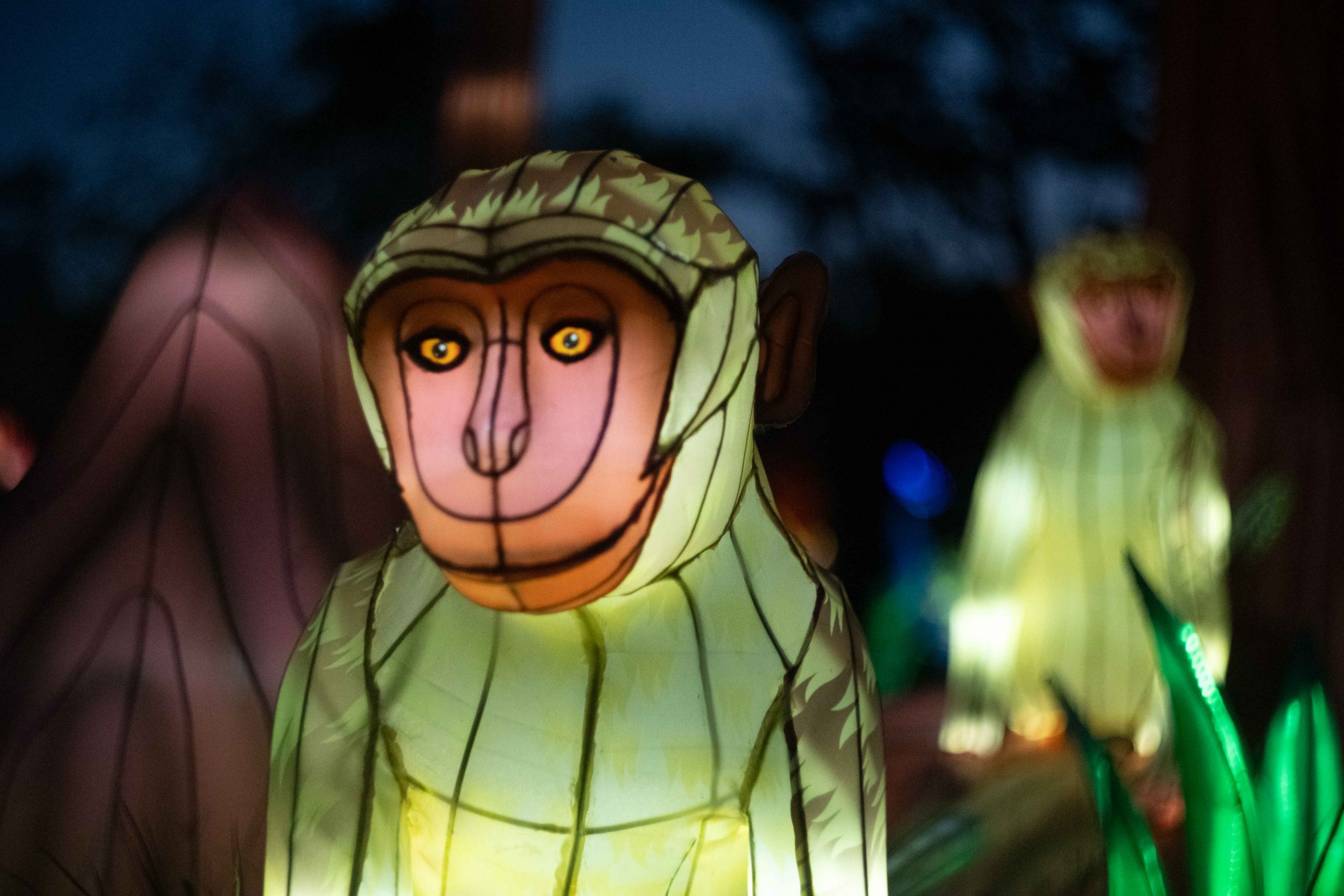
The Russian Insanity Lens: Monkeys Made This

Okay, I admit it. I’m a total sucker for a nifty fifty. Subject separation with a wide, fast aperture makes me shiver. Dreamy highlights that look like fireflies in the background jiggle my puddin’ – so a couple years back, I decided to buy a Zenit Helios 58mm f/2 lens. I had seen them discussed on-line from time to time and some of the images from these lenses looked amazing. Most specifically, it was the out of focus areas that made me take notice. It seemed like the background swam with constellations of delicious, blurry boceh. I had to have one to see if I could warp the world with it.

The Helios Zenit was the perfect lens for its time and place. It was created in post-war Soviet Russia where crystal clarity was the last thing The Party wanted to give to the people. Instead they warped everything with propaganda, lies and disinformation. Where else would you expect to find a lens that will show you – not what was in front of you – but what the lens wanted you see? It was insidious, but in an artistic way, so again, I had to have one. And I named it my Russian Insanity Lens.

One of the cool things about these lenses is that they each had their own character, so the web posts said. I purchased mine online and found just what I was looking for. Since Soviet manufacturing standards in the 1950s were not exactly up to Japanese or West German standards, actually, I’m not sure if they were even up to Kindergarten Arts and Crafts class standards, I looked for a ‘Used Imperfect’ grade lens. Unfortunately that search didn’t bring me much on Ebay, but I did find a sketchy guy in the Ukraine who – after a few weeks of wondering if I had been scammed – sent me a lens that looked like it had been taken apart by the monkeys in the photo and put together backwards – the aperture ring actually did work backwards to the markings. But the package wasn’t even soggy from the transAtlantic crossing, so I figured it was a win.

With a the right adapter, I was able to mount the Helios on my beloved Nikon Z7ii, which is kind of like using hamster on a treadmill to power a space shuttle, but the focus ring still worked, and when I pushed the shutter button, the lens went click and a photo appeared on the display screen. So then, it was time to experiment. It seems multiple light points or spread out backgrounds are best for these lenses and the narrow field of vision make for some nice subject separations in strange environments. And this isn’t my only insanity lens. I also own a 7 Artisans 35mm f/0.95 lens – dubbed the Chinese Insanity Lens – that I use on Fuji X bodies for the same purpose as the Russian – to play with reality.

Look, if reality is going to be such a pain in the ass every day, why shouldn’t we mess with it?
Thanks for looking.
Life is a Bowl of Freakin’ Cherries

In the dead of winter, up here in the northeast US, great color and indirect light can warm the mood to the point of being almost bearable. And when you are dreaming of Margaritaville and feeling like a mushroom, it’s great to have a visual reminder of how pretty, colorful and light filled the world is around us. Consider it a bit of visual hygge.
It’s no secret that I love old cameras and old, expired film. The grain and anomalies give me ‘warm and fuzzies.’ And the process of shooting with this great old gear, and the surprises you get after development, all make it a worthy pass time. Using the wide aperture of the f/1.8 lens, the focal plane is narrowed and that gives a dreamy, off-focus effect to much of the image. And life is, indeed, a bowl of freakin’ cherries.

About the Photo: The camera used to make this photo was the less-than-remarkable Nikon 2020 35mm SLR film camera. I purchased it for $25 at a camera show. After carving a huge pile of battery corrosion out of it, I got it working, loaded it up, and ran a few rolls through. I call the camera less-than-remarkable because it is not the best example of Nikon’s electronic capabilities, but still, it is perfectly competent for hobbyists who don’t need instant autofocus and can live with a few missed exposures per roll.

The film used is long expired Photoworks 200, which was never more than just OK when it was fresh. I’m not sure, but I suspect that this film stopped being fresh when Ronald Reagan was president. The lens was the underrated, compact, and delightful Nikkor 50mm AF. It’s slow to focus, but utterly competent in all other ways – an inexpensive, must-have lens for any Nikon film shooter on autofocus or manual cameras.