Gathering Winter’s Light

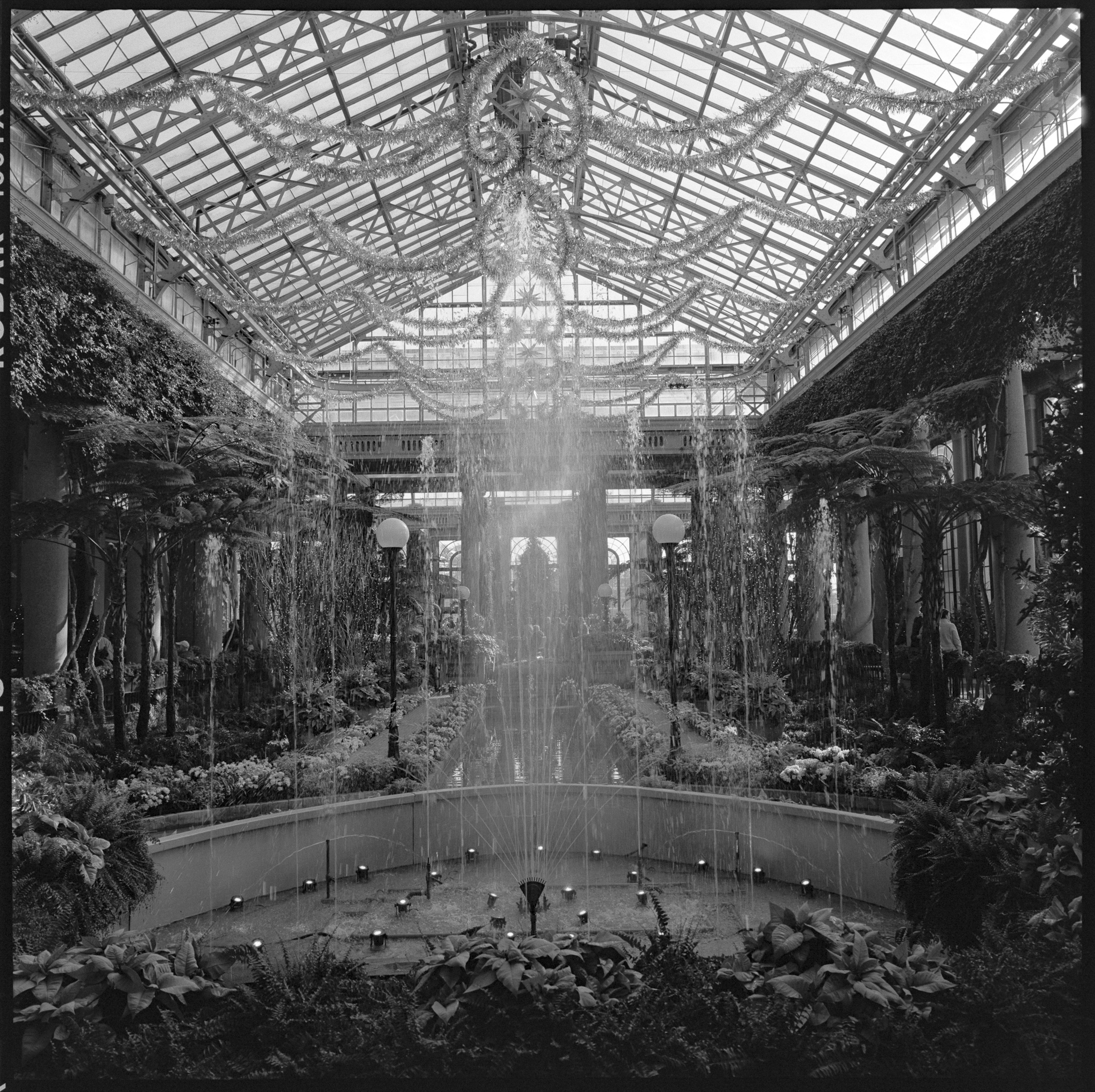
Gathering Winter’s Light – On the topic of Winter’s Light, be they hyggily candles (Google Hyyge -Denmark), a fireplace, or Xmas lights, there is place that I go to as a pilgrimage every winter – It’s called Longwood Gardens in Kennett Square, Pennsylvania.  It was, at one time, the private greenhouse of Pierre DuPont, who was kind of like the Elon Musk or maybe Jeff Bezos of his time. 

I like to go there, especially in the Winter, because I love the light and I can recharge from the Seasonal Blues. Making this photo was important for me because I’ll be taking this camera and lens with me on a trip next month and I rarely shoot wide-angle, medium-format film, so I wasn’t sure how this was going to go.  I like the immediate feedback of digital, but I really have to up my game to get this photo and have it work out, first shot, out-of-camera.  And of course, this lighting is kind of tricky, even with digital cameras – so much is backlit and in shadow.  

Having spent the past year assisting in a darkroom, I feel that, with this exercise,  I should only be allowed to dodge and burn, and tweak contrast if I want to stay true to my film discipline and get ready for the trip.  I know that ‘should’ is a dirty word from a creative standpoint, and we have so many new tools in our artistic kit since the days of Ansel Adams, but I also think that should is a magic word when practicing the discipline of photo purism and trying to hone one’s abilities, in camera. 

About This Photo:

Camera: Mamiya 6 Rangefinder, Lens: Mamiya 50mm f/3.5 (24mm full-frame equivalent)
Film: Kodak TriX 400 ISO

Weeping Sunflowers at Solstice

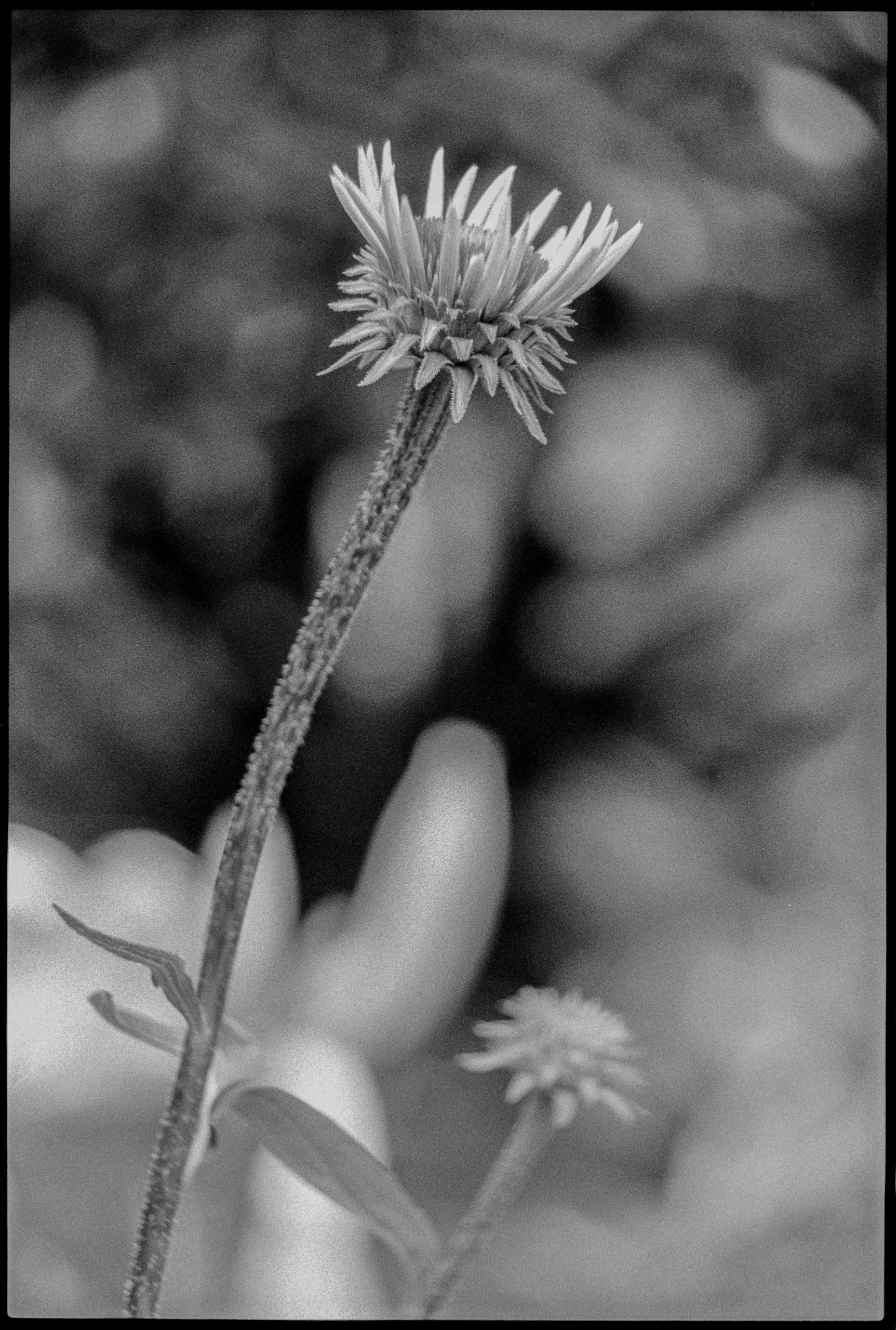
Well, it’s that time of the year again. The shortest days bring the least amount of light into our lives and most everything that grew over the summer is dead, sleeping or suicidal – like these poor, pathetic sunflowers. Looking at them, I wanted to crowd fund some therapy for them, but instead I did what any heartless photographic voyeur would do, I exploited their trauma with a picture.
When I pressed the shutter button, I knew that the image would be backlit, but I expected more color in the image from Kodak Portra 400, which is usually so delightfully vibrant. I was surprised and happy however, that the suggestion of color, rather than an overt blast of chroma, adds to the sense of the loss of light in the world at this time of year.
Shooting film on antique cameras never ceases to bring surprises and joy for this camera geek.

About the photo: This was taken with a Plaubel Makina 67 medium format film camera on fresh Kodak Portra 400. The camera is a unique joy to shoot with and the f/2.8 lens is unheard of in such a small portable package.

Photo Gallery: Things That Drip, Grow and Bark

This gallery is from a test of a film camera and lens to see if it was worth taking on trip to Yellowstone National Park. You have to click ‘Continue Reading’ in order to see all of the photos.
It’s best to extensively test a lens and camera combination prior to taking it somewhere important or where you might not have backup in case the combination is disappointing. From these tests, I found that I was happy enough with the Nikon F100 film camera with the Nikkor 28-200mm G ED f3.5-5.6 ED, F-Mount lens. I took gallery of shots was taken at home and at a local park just a few miles away. It includes some of my favorite subjects; Things that drip, grow and bark.

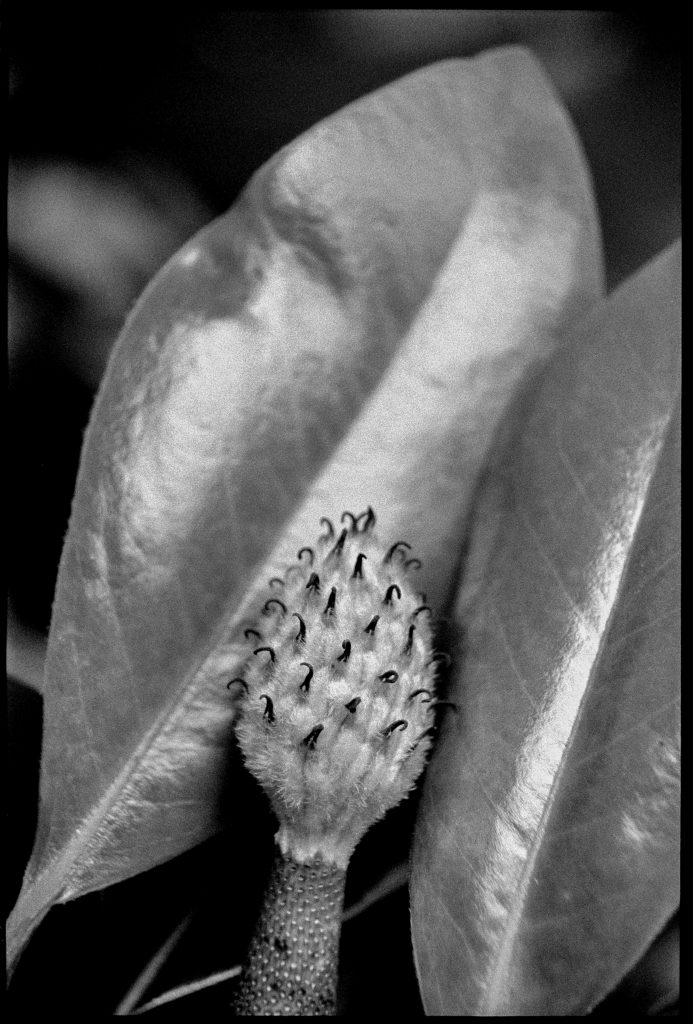
About the Photos: The flower shots were boceh/lens blur tests which came out better than expected considering that it is a very inexpensive (relatively), compact and lightweight superzoom lens – what I would usually consider a recipe for mediocrity. But in order to be outstanding, you have to stand out. And the separation in the flower shot, between the subject and the background, is excellent. Again, much better than expected. This lens is a winner.

I also love the Nikon F100 for vacation film photography – when you cannot go back to reshoot a subject later – because, while you can use it on full manual, you also have the option to run it in aperture priority or full auto, a luxury I sometimes need with wildlife and street scenes. The only downside of this camera, for me, is that it weighs in a little heavy. But if you throw a nifty fifty or a lighter weight prime lens on it, it really isn’t that bad.
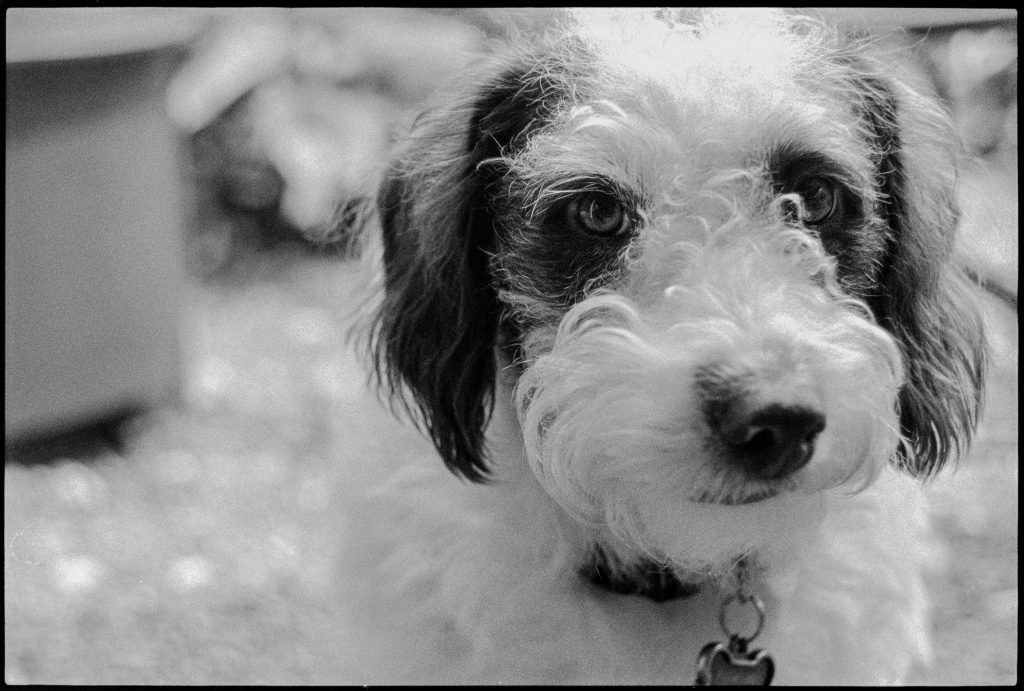
The film used, Ilford HP5 400 – showed some lovely grain and contrast. The water shots – my favorite go-to subject matter these days is anything water. There are a couple of indirect portraits in here, to further test the capability of the setup, and of course, the dog. A dog with human eyes, I get told often. All in all, a good workout for the lens and camera, which I did indeed take with me to Yellowstone, with good results.

I love testing ‘new-to-me’ film cameras.

Darkroom Fun With Lightroom

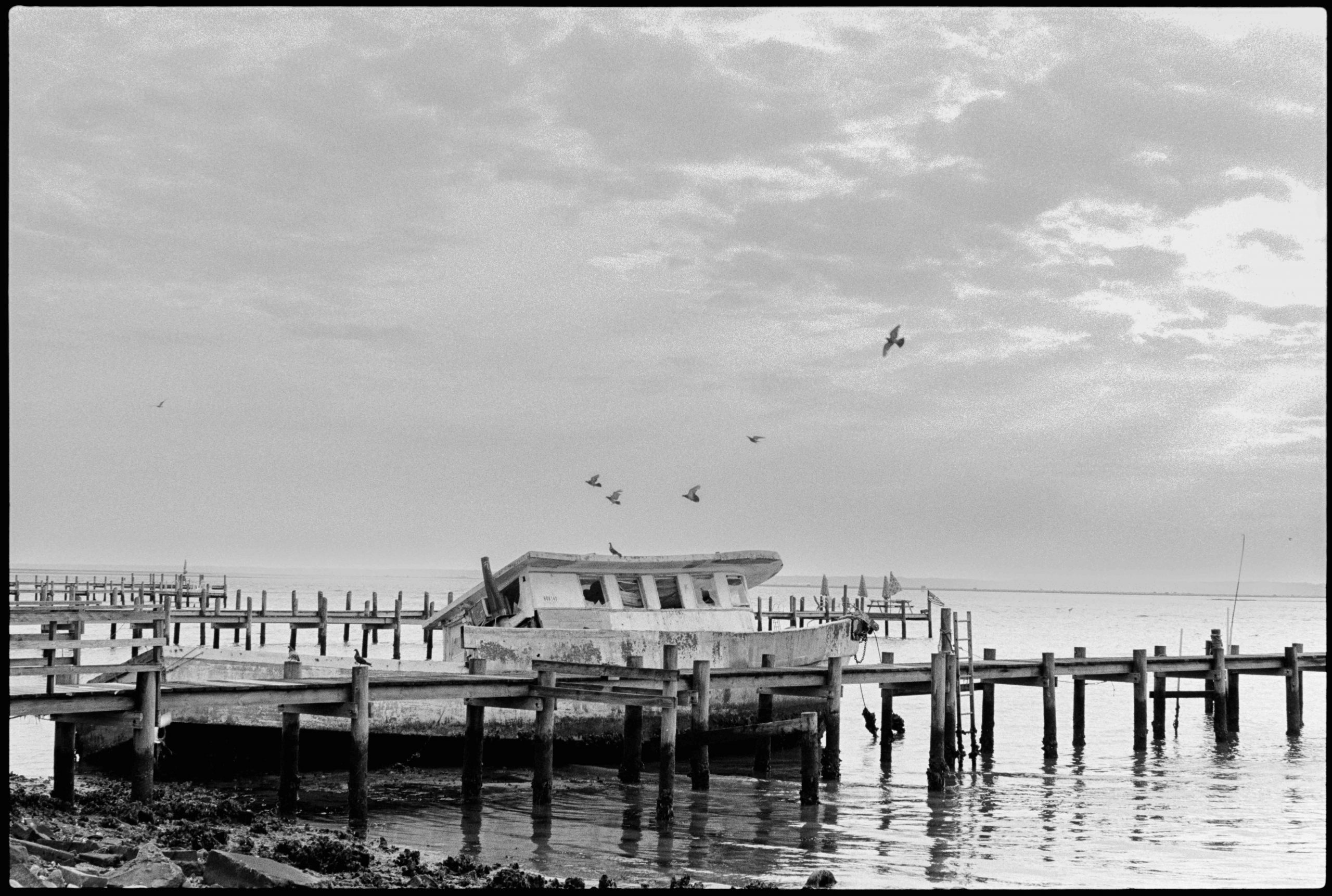
This photo is my favorite visual analogy of how I felt emerging from the pandemic. I felt like the boat – beached, abandoned, broken, and a target for pigeons. I spent a lot of time on this negative in the Fleisher Art Memorial Darkroom, working contrast filters and dodge and burn techniques in order to bring up the clouds and minimize the shadows enough to bring detail, but without losing the mood.
This version is what I replicated in Adobe Lightroom, which is so much faster and intuitive. Still the darkroom teaches these concepts so much better. Both tools, the darkroom and Lightroom make me a better photographer in different ways.

This was a borrowed camera shot and the biggest problem with borrowing a classic camera and a classic lens is that I usually have to go out and buy one after I’ve had a chance to play with them.

About the Photo: One of my favorite photography friends and my film processor of choice, Professor Gina Talley of https://www.femmefermental.com – lent me her 50-year old Nikon F2 camera along with a Nikkor 55mm f/3.5 Micro lens for my first post-pandemic vacation in Chincoteague, VA. The camera was amazing – it has a tactile feel that I can only describe as what a film camera should be. We discussed this and we decided that it had great ‘clickiness,’ which meant something at the time. The heft of the camera, the feel in the hand, the smooth throw of he film advance lever, the feel of the shutter button and the lovely sound of the shutter release all bring home a feeling of pure correctness. All though I slightly prefer the F3 due to its weight and its ability to be pure manual and also autoexposure – I like having options – I would rate this as one of my favorite 35mm film cameras.

The lens – the Nikkor 55mm f/3.5 Micro – is joy. It is primitive; It doesn’t have autofocus and you can’t meter through it, but it is one of the finest lenses I have used in the Nikon universe. I just had to buy both an F2 and a 55mm Micro after this exercise. Darn you, Gina!

Film used for this shot was Ilford HP5 400, it has a nice grain and I love it as much as Kodak Tri-X, well almost.

Unexpected Wildlife

Sometimes I feel like someone is watching me…

It’s kind of disturbing to look out your office window and see someone looking back at you, but it’s also OK, when you’re a nature geek. This cute fellow is a Screech Owl who spends his days sleeping in my tree, Just a few feet from my house, and on a busy suburban street. He’s a wonderful reminder that nature has been finding ways to integrate with us, and even though this is probably because the animals have no better option, it’s really nice to see them, at least until they break in and have a party in your attic.
Since moving into our home ten years ago in a very suburban neighborhood we have hosted a deer, several foxes, this owl, red-tail hawks, an opossum, and a racoon or two. I won’t mention the flying squirrels, but they are there and they keep coming back. Especially the we adopted – Squeakus. I’m a sucker for cute fuzzy tail and a long lens.

About the Photo: This one was shot with the legendary Nikon D500 camera and the under-appreciated (by the media, not by me) Nikkor 28-300 G Super Zoom lens on a frigid cold day. The owl did his best to look nonchalant as I worked in for a good shot. He was a good sport and patient model. I’d definitely work with him again.

I like to consider this one as an effective ‘two-beat photo,’ if you are going to use the terminology of Michael Rubin, the creator of the Everyday Photography, Every Day podcast and his book Photo Haiku. The first beat being an effective, high contrast photo of a tree in the suburbs, and the second beat, the punchline, if you will, being the discovery of the owl in the knot.

Foggy Landscape at Harriton House

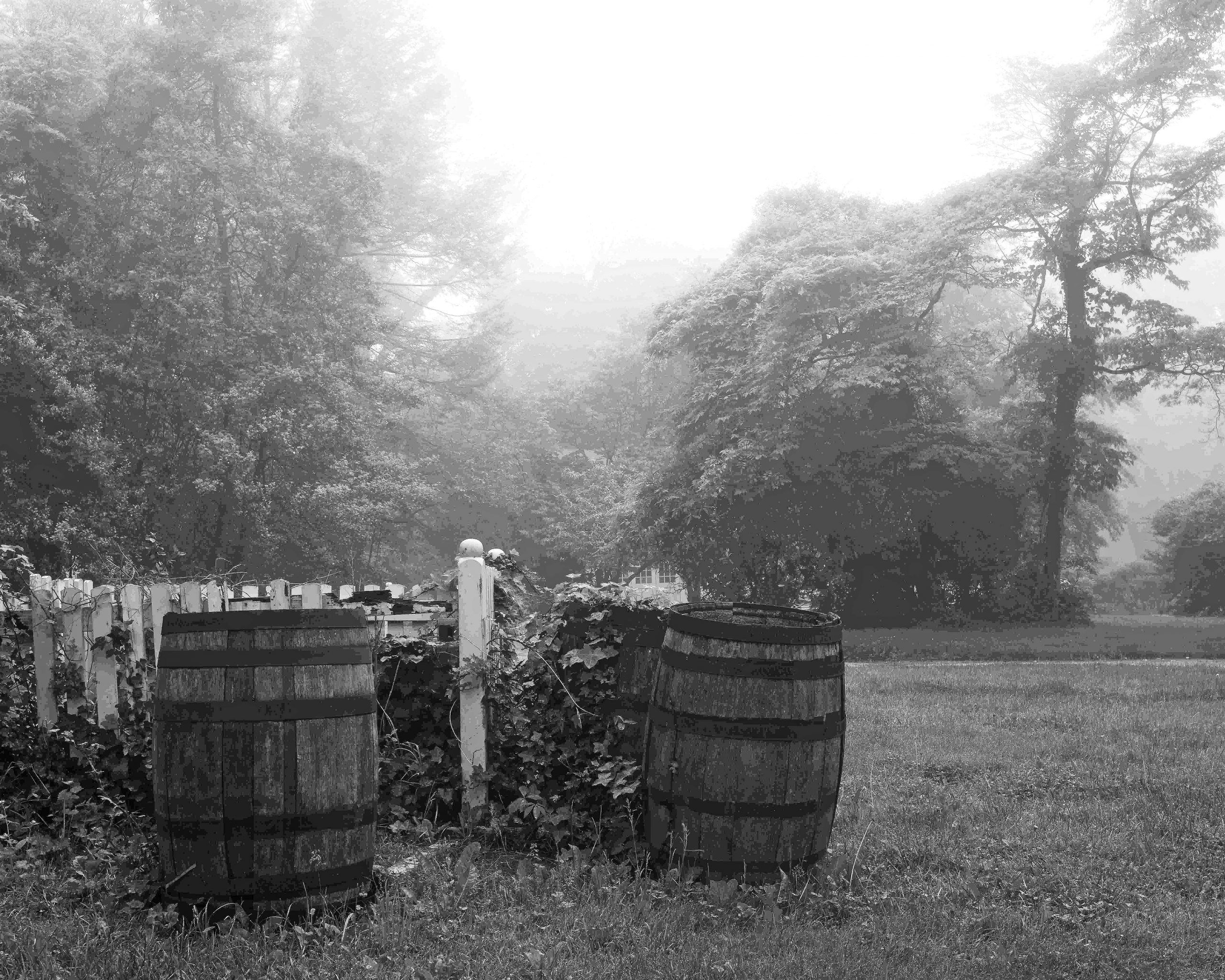
The Nikon Z7ii is an astounding camera, and is probably the most capable camera body that I have ever used. It produces a 48MP image with image stabilization and very good low light capability. For this shot, I got up early on a foggy morning and ran out to a 18th century mansion, Harriton House, on Philadelphia’s Main Line. There wasn’t a whole lot of light when I shot this, but at 1/10 of a second at a f/14 aperture, I was able to get all of the detail that anyone could reasonably expect to get, plus that wonderful fall of created by the fog.

I used an old lens for this, the f-mount Nikkor VR 16-25 f/4G, and was very happy with the results. Converting to black and white was the best choice for this image.

Boost Drama with Rim Lighting

Rim Lighting creates drama in a photo – more so than with most lighting techniques – and in the right situation it can be just the creativity you need. This shot turned a photo a session from typical and blah into something that really pops.

To do rim lighting you really need off-camera lighting.