A Forest for the Trees

Fifteen years ago, traveling with an underwater camera meant carrying a dedicated camera system and housing along with all my scuba gear—two full suitcases and a carry-on bag. These days, the cost and aggravation of transporting that much equipment can pretty much ruin the idea of traveling at all.

Last year, I bought a DIVEVOLK SeaTouch 4 Max housing for my iPhone 15 Pro Max, along with a red filter and a few other little doohickeys I thought I might need. Compared with the cost of housing any of my APS-C, full-frame, or medium-format cameras, it was ridiculously inexpensive. So inexpensive that I reread the reviews to make sure the housing wasn’t made from Swiss cheese or cardboard.

Before 2023, I hadn’t been diving in eleven years. My dive gear—and I—were old, crusty, and out of practice. But getting back into the water with a camera was life-affirming and immediately comfortable, like getting back on a bicycle. By streamlining both my camera system and dive gear, I was also able to reduce the cost and stress of traveling to a single suitcase.

There was one problem.

It occurred to me that if the housing failed at depth, the phone inside it—my lifeline to the digital world and the place where I stored nearly everything I needed for the trip—would probably flood. Getting home could become interesting in all the wrong ways.

So I went to Back Market and bought a heavily used iPhone 14 Pro for about half the price of a new phone. That would become my underwater camera. If it didn’t work, I could still use the iPhone 15 and hope for the best.

Since buying the setup, I have photographed dives in the Florida caverns and on the reefs of Bonaire and Dominica, with no complaints whatsoever.

When I made this photograph, there was a fair amount of sargassum in the water, and visibility was cloudy. The original image was drained of color and predominantly blue. It was pleasing, but not quite the photograph I wanted.

The pilings already felt less like a human structure than an underwater forest, with the divers drifting between them like unfamiliar wildlife. I converted the photograph to black and white, then added a little clarity and contrast in Lightroom. The monochrome treatment separated the light, sediment, divers, and encrusted columns more clearly while preserving the murky atmosphere that first attracted me.

Although I had brought both a video light and a red filter, I found myself loving the black-and-white renderings from this location. Removing the color seemed to make the underwater world stranger, quieter, and somehow more timeless.

All in all, the DIVEVOLK housing—and my decision to trust an Apple phone as an underwater camera—has been one of my best photographic purchases in recent years. I love the results I am getting, and DIVEVOLK is firmly on my radar as I continue rebuilding my underwater photography system.

The Camera You Have With You #1 – FujiFilm X-E4

Recently, I traveled to Portugal with a medium format film camera – the classic Mamiya Six – arguably one of the best analog medium-format film cameras in existence. But because it is a fairly large, heavy camera, and it’s not weather resistant, there were times when I left it in my room and fell back to a ‘lesser’ camera – my backup on the trip – The FujiFilm X-E4.

I put the word ‘lesser’ in quotes because I don’t believe that the Fuji is lesser than the Mamiya, rather than just different – like Buddy Elf being ‘special.’ As it turns out, even if he was a lousy toymaker, Buddy was pretty awesome in his own right.

Yes, the Fuji is less expensive than the Mamiya, and it’s not up to the potential image quality of the Mamiya in optimal light, but it is still a competent and capable tool and preferable to the Mamiya in low light, for rapid shooting, in bad weather, and if you are already loaded with a lot of other heavy stuff to carry around. In this instance, I needed to pull off a quick photo before Mrs. Doubtfire, (seen in the upper right window), moved out of frame. If I was shooting the Mamiya, I wouldn’t have had enough time framing and focusing before she would be gone.

A lot of camera snobs might look down at the inexpensive and tiny-but-mighty X-E4 and the kit lens I had on it for this shot, but I couldn’t be happier with the photo, specs and price be damned. Use the right tool for the job, and remember that the right tool is the camera that you have with you, be it medium format, crop format, or even a phone camera.

About this Photo: Camera: Fujifilm X-E4, Lens: FujiFilm 18-55mm f/2.8–4.0 R LM OIS. Location: Lisbon, Portugal.

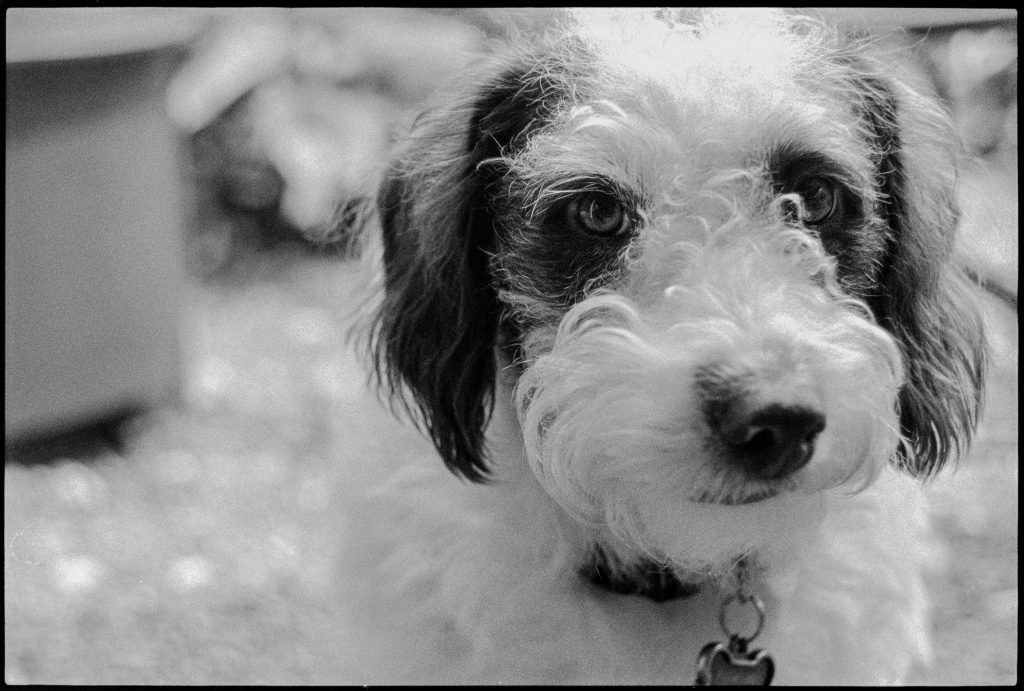
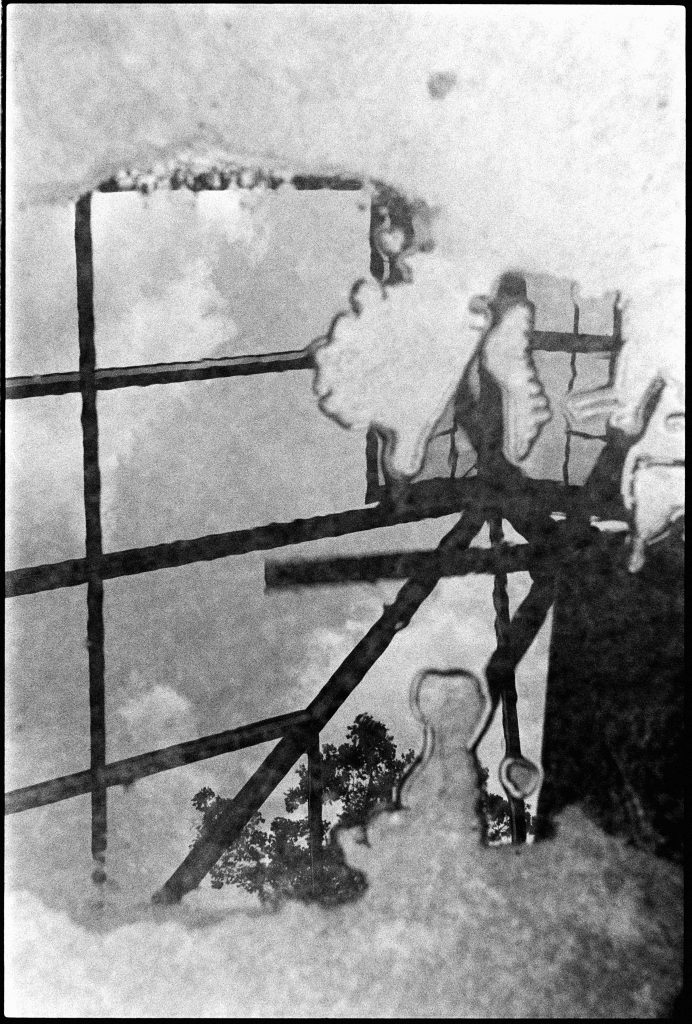
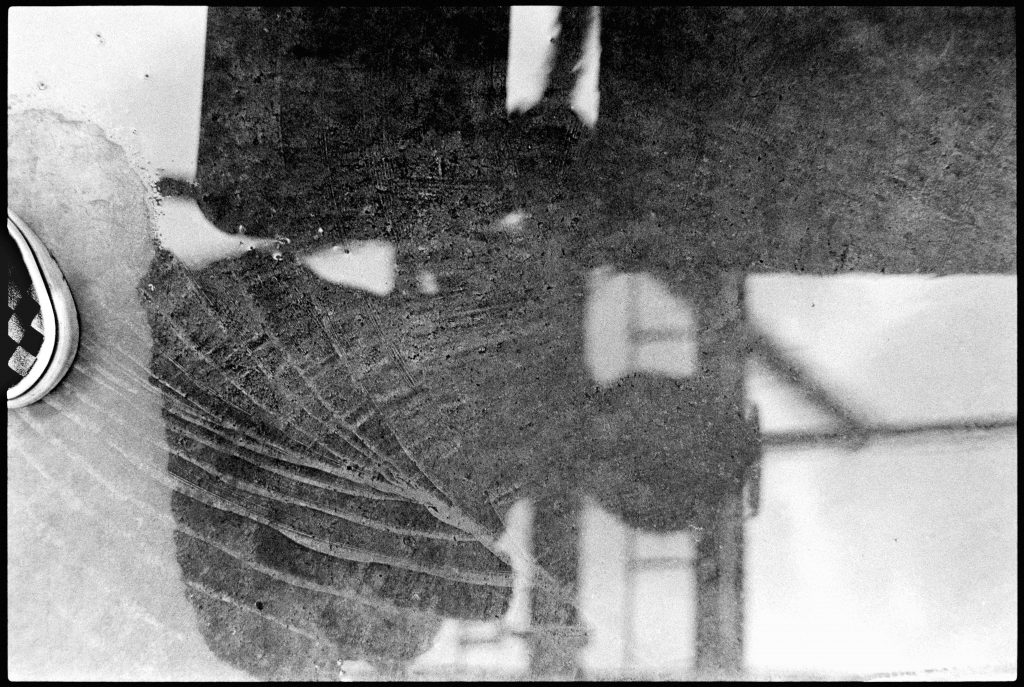
Photo Gallery: Things That Drip, Grow and Bark

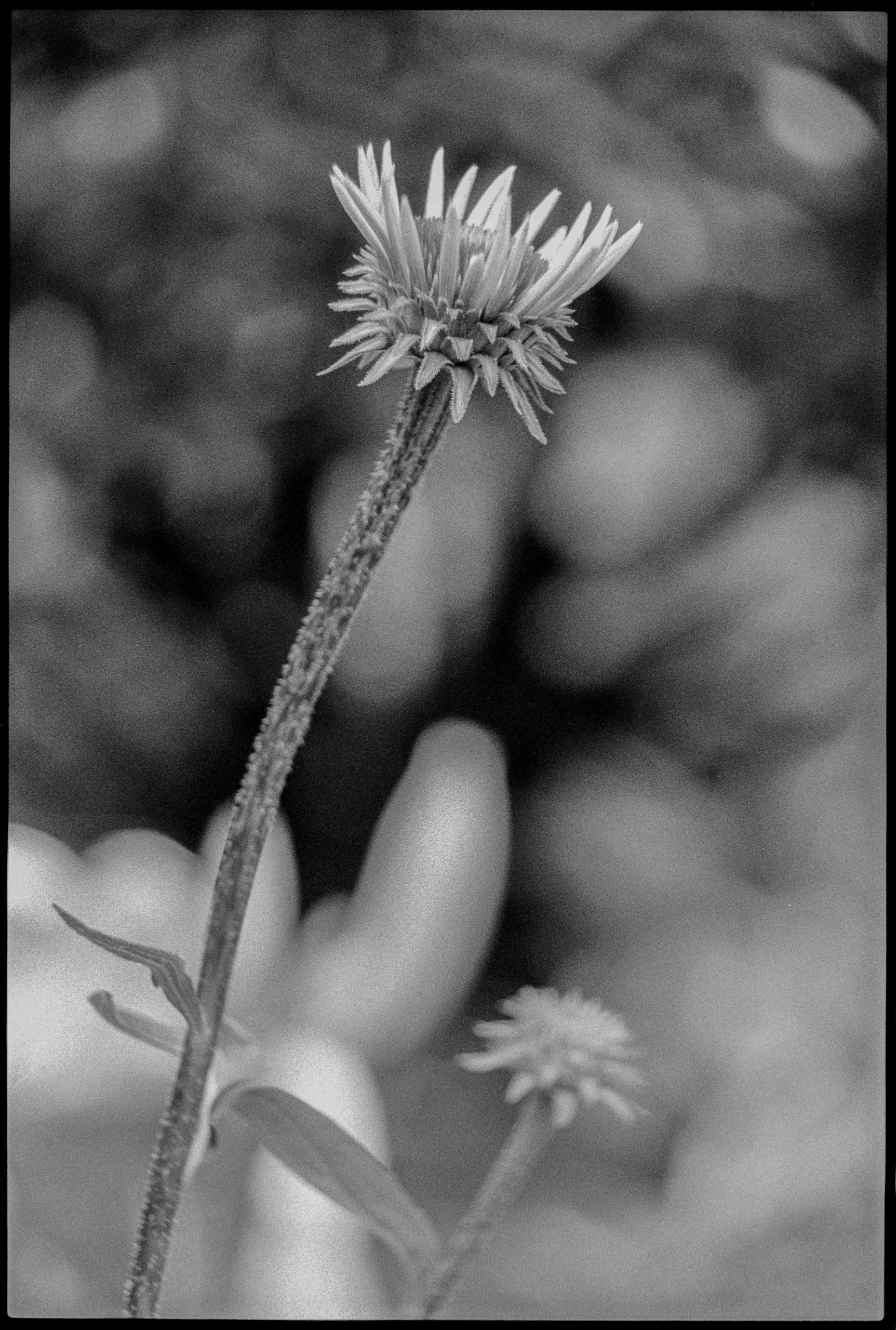
This gallery is from a test of a film camera and lens to see if it was worth taking on trip to Yellowstone National Park. You have to click ‘Continue Reading’ in order to see all of the photos.
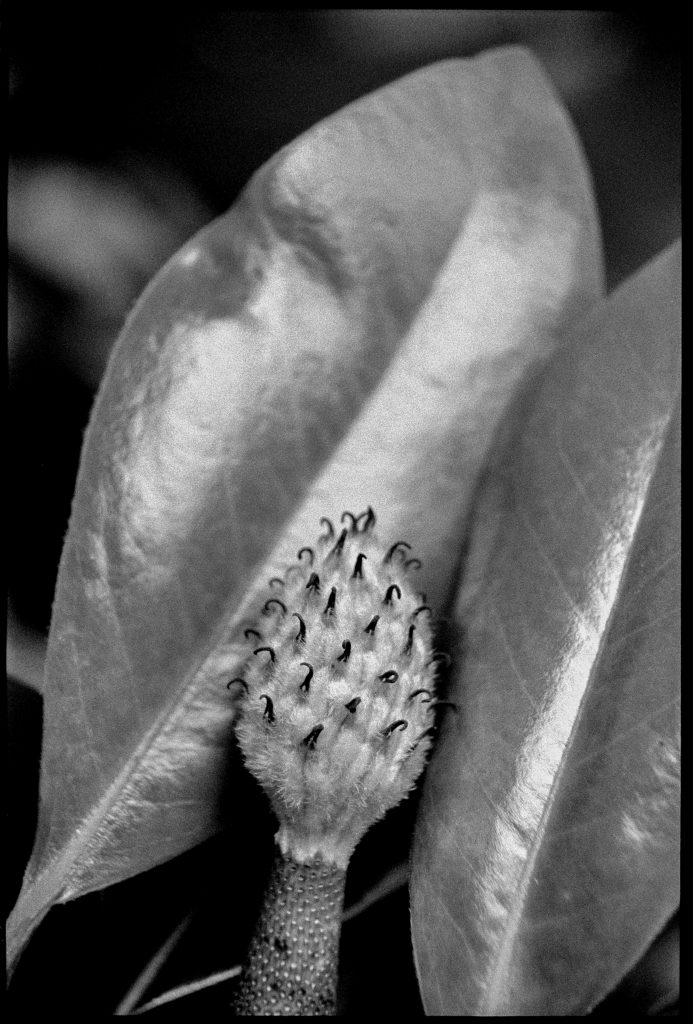
It’s best to extensively test a lens and camera combination prior to taking it somewhere important or where you might not have backup in case the combination is disappointing. From these tests, I found that I was happy enough with the Nikon F100 film camera with the Nikkor 28-200mm G ED f3.5-5.6 ED, F-Mount lens. I took gallery of shots was taken at home and at a local park just a few miles away. It includes some of my favorite subjects; Things that drip, grow and bark.

About the Photos: The flower shots were boceh/lens blur tests which came out better than expected considering that it is a very inexpensive (relatively), compact and lightweight superzoom lens – what I would usually consider a recipe for mediocrity. But in order to be outstanding, you have to stand out. And the separation in the flower shot, between the subject and the background, is excellent. Again, much better than expected. This lens is a winner.

I also love the Nikon F100 for vacation film photography – when you cannot go back to reshoot a subject later – because, while you can use it on full manual, you also have the option to run it in aperture priority or full auto, a luxury I sometimes need with wildlife and street scenes. The only downside of this camera, for me, is that it weighs in a little heavy. But if you throw a nifty fifty or a lighter weight prime lens on it, it really isn’t that bad.
The film used, Ilford HP5 400 – showed some lovely grain and contrast. The water shots – my favorite go-to subject matter these days is anything water. There are a couple of indirect portraits in here, to further test the capability of the setup, and of course, the dog. A dog with human eyes, I get told often. All in all, a good workout for the lens and camera, which I did indeed take with me to Yellowstone, with good results.

I love testing ‘new-to-me’ film cameras.

Darkroom Fun With Lightroom

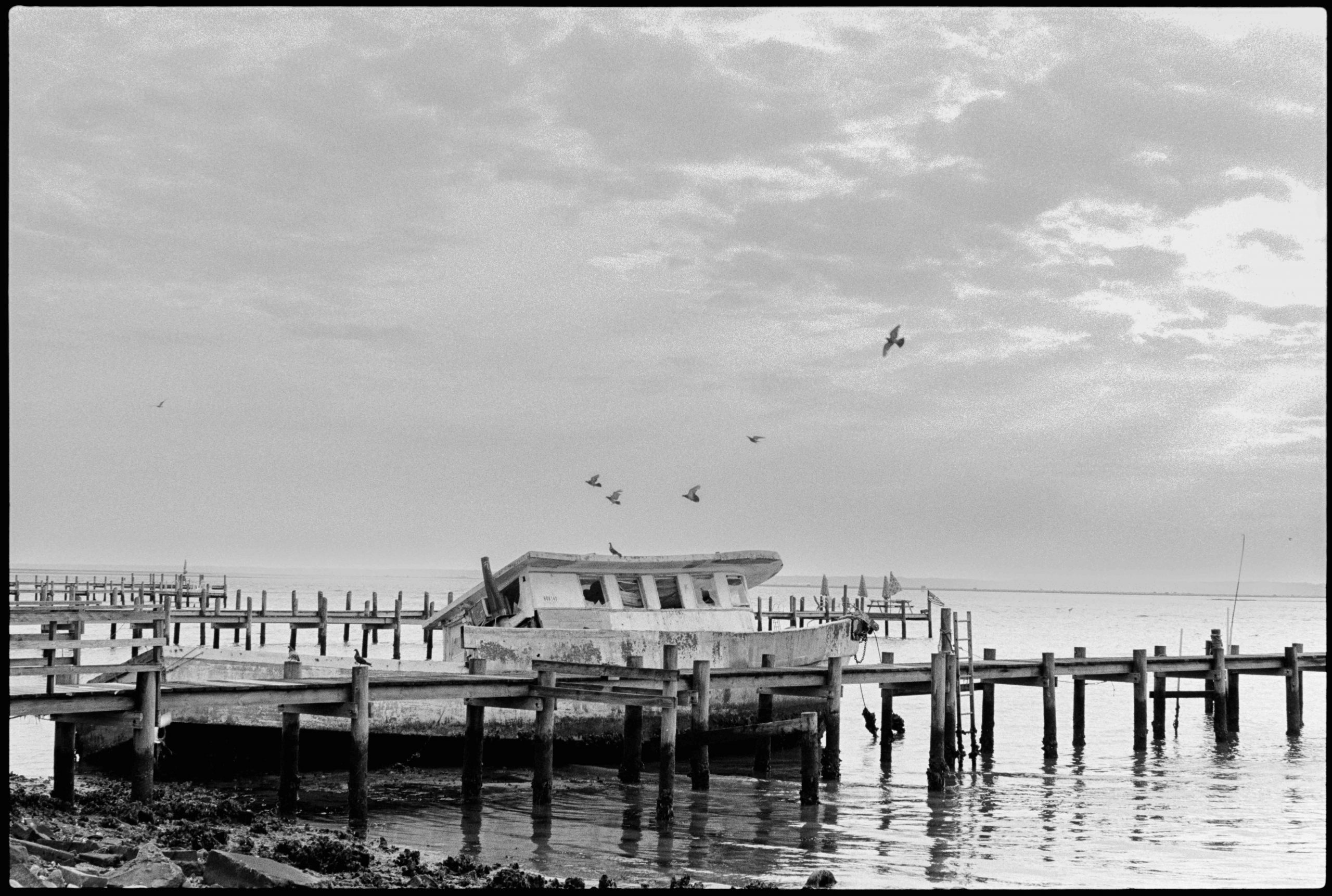
This photo is my favorite visual analogy of how I felt emerging from the pandemic. I felt like the boat – beached, abandoned, broken, and a target for pigeons. I spent a lot of time on this negative in the Fleisher Art Memorial Darkroom, working contrast filters and dodge and burn techniques in order to bring up the clouds and minimize the shadows enough to bring detail, but without losing the mood.
This version is what I replicated in Adobe Lightroom, which is so much faster and intuitive. Still the darkroom teaches these concepts so much better. Both tools, the darkroom and Lightroom make me a better photographer in different ways.

This was a borrowed camera shot and the biggest problem with borrowing a classic camera and a classic lens is that I usually have to go out and buy one after I’ve had a chance to play with them.

About the Photo: One of my favorite photography friends and my film processor of choice, Professor Gina Talley of https://www.femmefermental.com – lent me her 50-year old Nikon F2 camera along with a Nikkor 55mm f/3.5 Micro lens for my first post-pandemic vacation in Chincoteague, VA. The camera was amazing – it has a tactile feel that I can only describe as what a film camera should be. We discussed this and we decided that it had great ‘clickiness,’ which meant something at the time. The heft of the camera, the feel in the hand, the smooth throw of he film advance lever, the feel of the shutter button and the lovely sound of the shutter release all bring home a feeling of pure correctness. All though I slightly prefer the F3 due to its weight and its ability to be pure manual and also autoexposure – I like having options – I would rate this as one of my favorite 35mm film cameras.

The lens – the Nikkor 55mm f/3.5 Micro – is joy. It is primitive; It doesn’t have autofocus and you can’t meter through it, but it is one of the finest lenses I have used in the Nikon universe. I just had to buy both an F2 and a 55mm Micro after this exercise. Darn you, Gina!

Film used for this shot was Ilford HP5 400, it has a nice grain and I love it as much as Kodak Tri-X, well almost.

A Kinder, Gentler Age.

I like old cameras, I like old film, and I like old houses, so this image gave me a happy. I’m not so fond of the pickup truck, but you can’t always get everything that you want.
Cape May, New Jersey is the last town heading south on the Jersey shore. It’s a throwback in many ways – more civil – calmer – and less overtly obnoxious than the glitz and over-the-top ostentation of the New Jersey beaches to the north. It’s not like they don’t show off here, they’re just more subtle about it and adhere to community set standards. And what that creates is a beautiful town with grand old houses that make for wonderful photography.

About the Photo: This shot was made with a small, handy Ricoh AF-5 point-and-shoot camera – manufactured around 1983, and shot on long expired Kodak Gold 400 film, most probably from the 1990s. The house is at least 100 years older than either, and the truck, well who really cares?

The great thing about the Ricoh is that it’s cheap and small and has a great lens – a 38mm f/2.8. It produced such lovely colors and awesome grain, even with ancient film. On beach excursions with this camera, I usually bring a quart ziploc bag with me to keep it safe from water and to keep it free from sand. And then I slide it into my backpack pocket to have a great, light and compact film camera always ready to go. One that I don’t have to worry about.
Cheap film cameras (relatively cheap, anyway) are great. I purchased this one five years earlier for $20. I see they’re now going for $75-$100 on ebay. Retro fun doesn’t mean that you have to break the bank, but as these cameras start to disappear, it’s getting more expensive every day.

Cormorants at Niagara Falls

Sometimes the challenge in creating impactful travel photography is to isolate the photo from the environment. Originally I was taken by many cormorants occupying bare trees along the Niagara River. Try as I might, I could not compose a decent photo as the background and the subject matter were much too busy. Finally, I decided to zoom in on a just a few of the birds and carved this shot out of the background. While the entire scene would have been unremarkable, in the cropped shot the cormorants seem to be engaged in a meaningful conversation in their own blue universe.

Kingston, on the Hudson

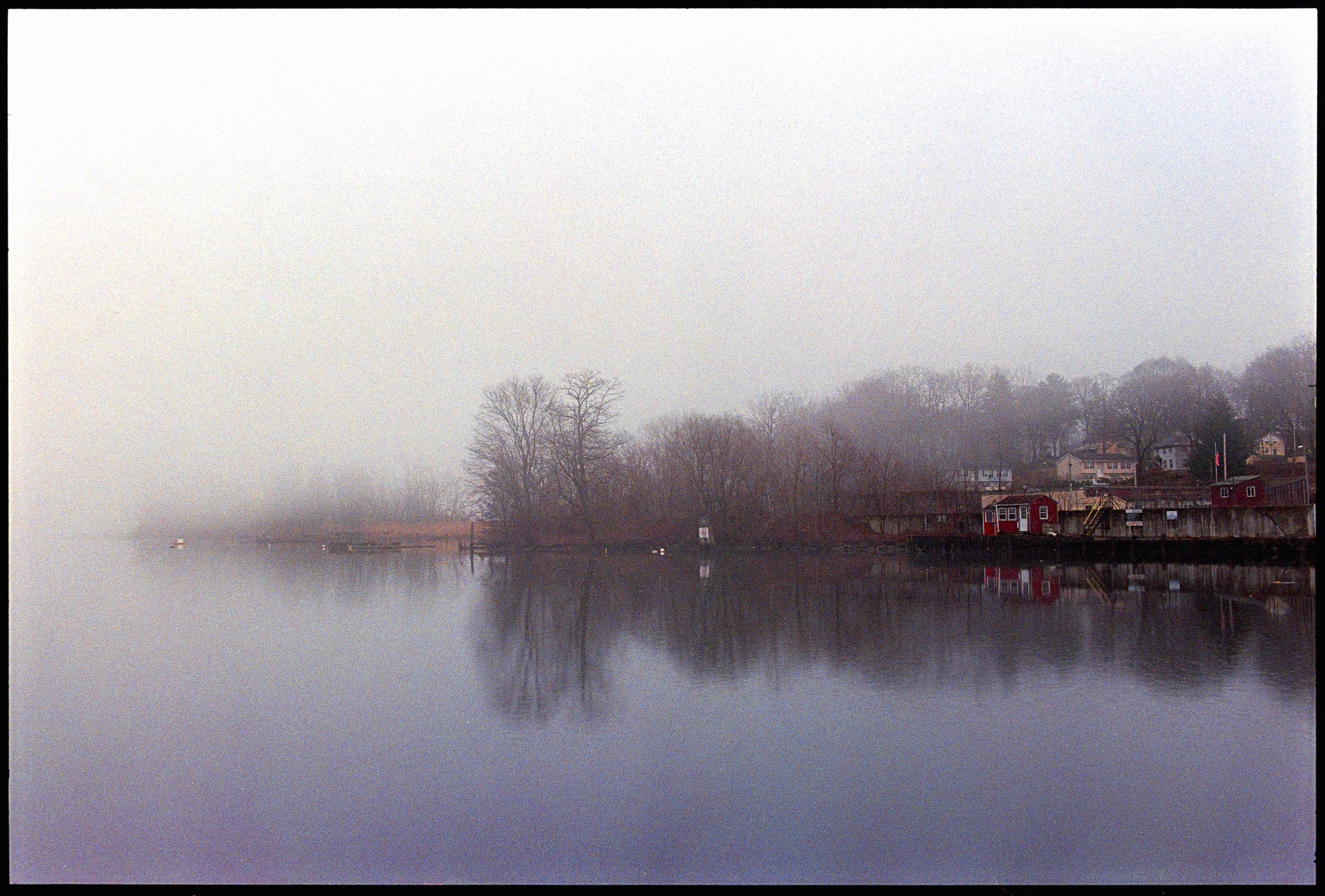
Sometimes life throws you fog. When that happens it’s best to get out your camera. For this image, I used the old, trustworthy Nikon N90, Kodak Portra 400 Film, Nikkor 35mm f/1.8 lens. The camera did a great job of metering a fairly tough image despite the fact that it is more than 30 years old. The colors came up great with the Kodak film. What amazing grain!

Salad Days: Storytelling With Fuji XT2 Color Rendition

Doing a photoshoot in a supermarket was never high on my list, but there I was on vacation, three thousand miles from home, with only a travel camera and a kit lens. Luckily the camera was a Fuji XT2, and lens was Fuji’s XF 18-55mm f/2.8-4, the most capable kit lens I’ve ever used.


I was walking by the vegetable section in the produce department of a Fred Meyer’s Market near Portland, Oregon, when I saw this explosion of color, and even under the horror of fluorescent supermarket lights, I knew I had to capture the color and symmetry that some anonymous produce department person – someone who obviously should be working in arts – had set up to delight and entice the ravenous soccer moms of the Pacific Northwest.


This should not have been an easy task but two factors worked to my favor. First, this supermarket periodically sprayed their produce with a fine mist of water, which kept the carrots and beets damp and vibrant. Second, the Fuji XT2 handles colors magnificently. These little crop format cameras have an uncanny ability to continuously knock me out of my shoes with how they render colors. In this case, the camera’s processor made mincemeat out of the bad fluorescent lighting and left me with very minimal post production tasks.


To me, the resulting photo captured all of the shades and promise of late summer – when the photo was taken – promising the bounty of the harvest time to come.


I have smaller cameras and I have bigger, more capable cameras, but to me, the Fuji XT-2 is the perfect travel camera, providing all of the features I need in order to hit any creative needs that might come up on location, thousands of miles from home.